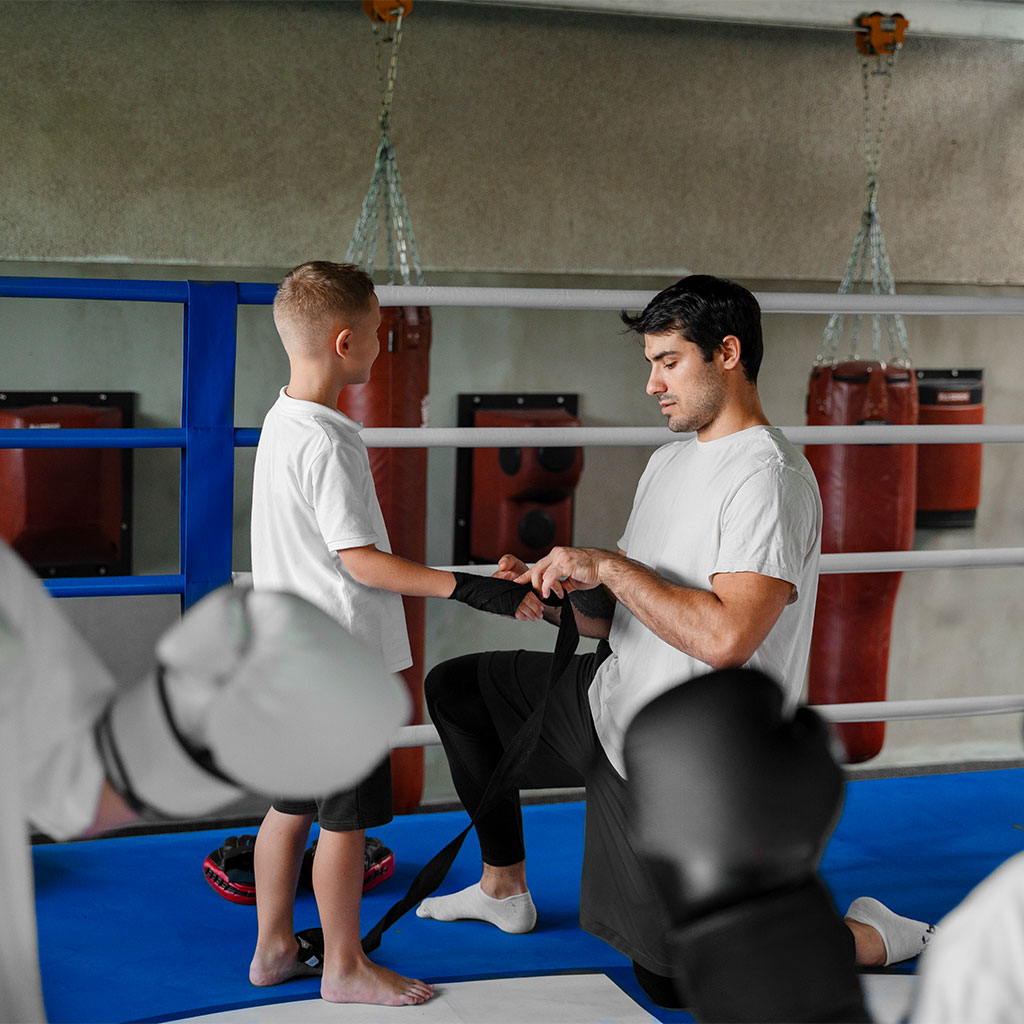
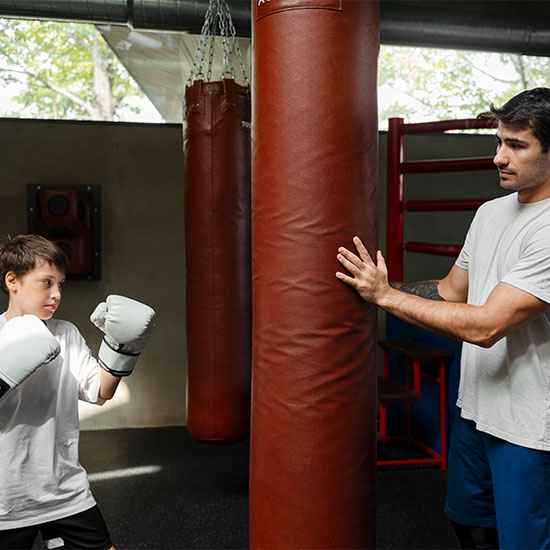
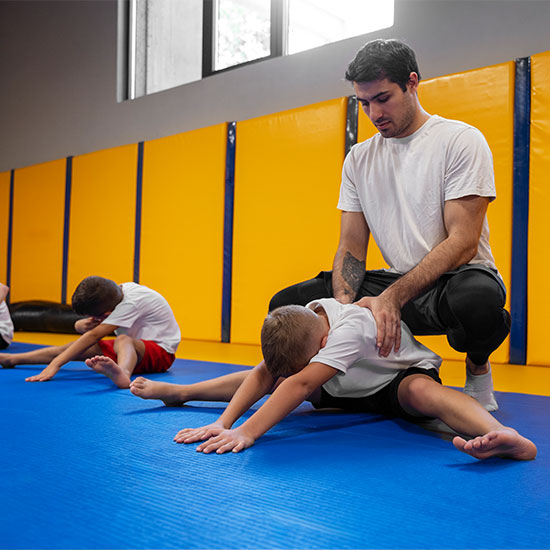
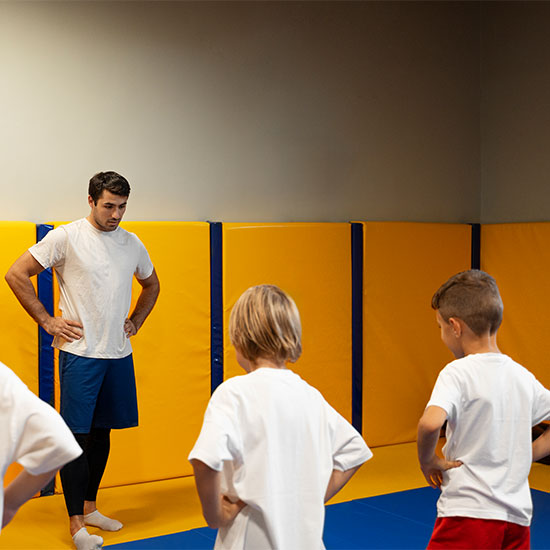
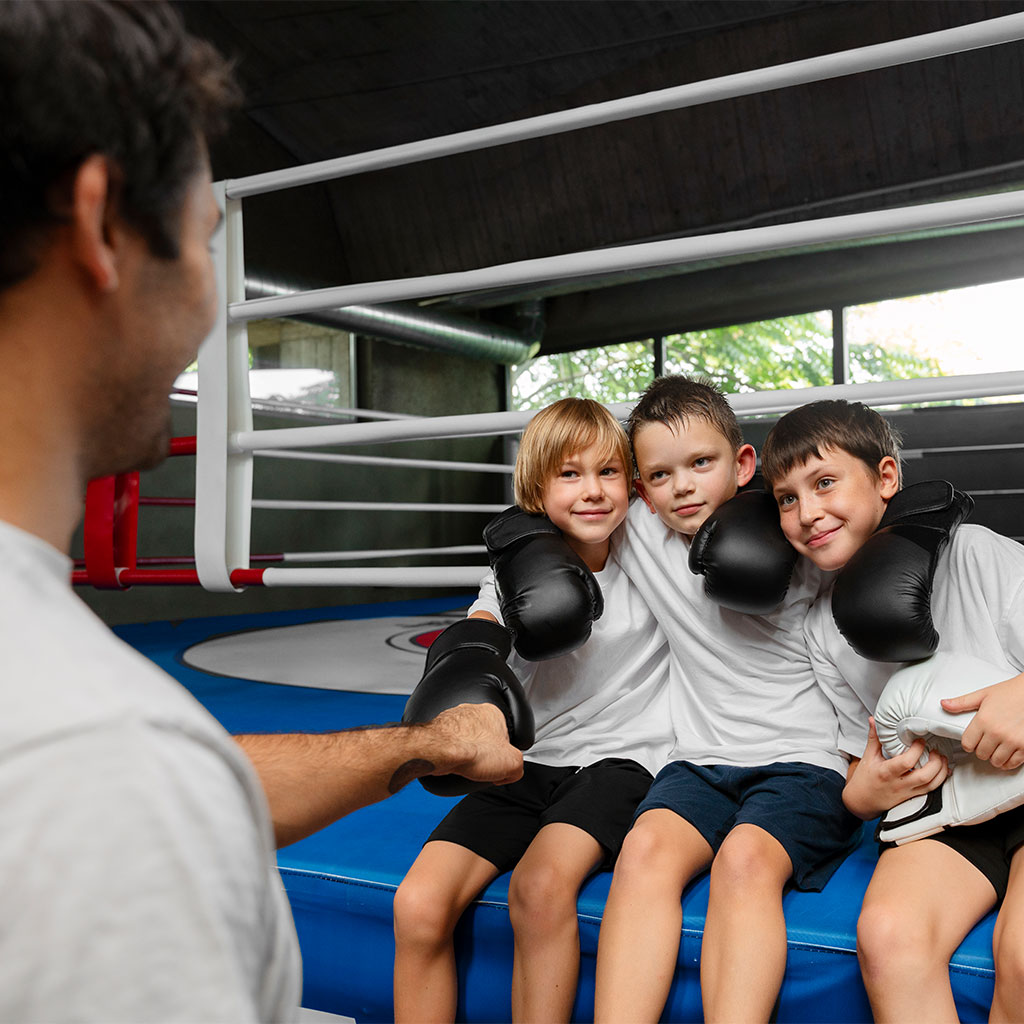
We help children develop confidence, focus, emotional resilience, and strong social skills — through mindful martial arts training rooted in respect, discipline, and zero violence.
Give your child the tools to grow into a balanced, confident, and kind young leader.
At TRIFIT, our mission is to support children in their physical, emotional, mental, and social development. For us, MMA is not about fighting — it is about Mindfulness in Motion: structured movement that teaches focus, self-control, resilience, and emotional awareness. We teach kids to use their voice before their fists, manage pressure, and navigate conflicts calmly.
Our vision is to lead the way in non-violent, character-focused MMA for children — a place where emotional safety, discipline, and respect come first. Here, kids learn to handle conflicts calmly, set boundaries with confidence, resist bullying, and support others. They understand that kindness is a form of strength, not weakness. We believe the strongest children are those who control their emotions, act with integrity, and stand tall without aggression.
You are: – A teacher – A behavioral guide – A mental coach – A protector of emotional safety – A motivator – A leader and role model – A calm, grounding presence Children learn less from what you say and more from how you speak, move, react, and lead.
We don’t train kids to fight better. We train them to: – handle conflicts peacefully – stand up for themselves – stay calm under pressure – resist bullying – control anger and impulses – build discipline and resilience – become confident and kind humans Every technique we teach has a mental and emotional purpose.
Focus Areas: – Self-discipline – Impulse control / anger management – Resilience – Body coordination – Verbal Defense basics – Structure, routine, and fun
Methods: – Short drills, frequent variation – Play-based learning – Reaction & freeze games – Simple techniques with easy names – Breathing exercises – Story-based cues (lion stance, ninja balance)
Ages 7–11
(Core Skills Program)
Focus Areas: – Technical fundamentals – Anti-Bullying training – Conflict resolution – Strong posture & body language – Teamwork and social skills – Emotional regulation
Methods: – Partner drills with clear rules – Role-play of school conflict scenarios – “What do I do if…?” exercises – Balance, reaction & movement drills – Weekly reflection moment
Go to a teacher/parent/coach. This is strength — not tattling.
Anti-Bullying Program
Every session includes a short anti-bullying component.
In our anti-bullying training, children learn what bullying is, how to set boundaries, stay calm under provocation, walk away safely, ask for help, and support others as positive bystanders. We teach them to use words before fists and strengthen these skills through role-plays, communication scripts, posture and voice training, confidence exercises, and our simple “Stop–Walk–Talk” method.
Emotional strength is a core part of every training.
Kids practice: – 4-second breathing – Power Pose – “Name it to tame it” (naming emotions) – Shake-off exercises – 10-second focus reset – Celebrating effort, not perfection We care more about character than technique.
Training Structure
Each TRIFIT class follows a structured seven-step flow designed to support children emotionally, mentally, and physically. This routine provides clarity and stability, helping kids enter the training with focus and confidence. We begin by setting expectations and reinforcing rules, then move into dynamic warm-ups that build coordination and prepare the body for learning. A dedicated technique phase ensures that children develop age-appropriate skills, while a short anti-bullying or verbal-defense segment strengthens their communication and conflict-resolution abilities. Fast reaction drills and playful power exercises keep energy high and sharpen focus, before cooperative partner work reinforces teamwork and social skills. The session ends with a calm cool-down and reflection moment, allowing children to internalize what they’ve learned and leave the mat centered and confident.
Coaches must never: – yell – shame – publicly criticize – lose emotional control Instead: – Use short, clear instructions – Bend down to eye level – Offer choices – Reinforce positive behavior – “Pause and Reset” instead of punishment A dysregulated child needs leadership, not pressure.
Parent Communication
Always: – be respectful – be professional – be short and clear – highlight a success – avoid negative talk in front of the child If there is an issue: Speak privately, calmly, and solution-focused.
Safety & TRIFIT Standards
– No hard sparring – No unsafe techniques – Mats must always be clean and organized – Coaches arrive 10 minutes before class – Adults must stay off the mat unless allowed – Breaks, drills, and partner work must be supervised closely – Emotional and physical safety comes before technique